
 (888) 294-5269

Carrying Compressed Gases – Safety and Best Practices
Sep 26, 2025
Carrying Compressed Gases – Safety and Best Practices
The majority of industries such as construction together with welding and medical services and scientific research depend on compressed gases for their operations. As useful as these gases may be they present significant risk components when management and delivery processes are not executed correctly. Protecting personal safety during compressed gas transport operations remains essential because inadequate safety measures lead to accidents and injuries to workers as well as damage to property. A single accident like a gas leak or a poorly fastened cylinder creates absolute risks that result in destructive events such as explosions and fires and health-threatening situations.
Tabling these dangers requires proper procedures as well as secure transportation techniques. Proper ventilation and high-quality storage solutions are mandatory elements of strict guidelines which businesses need to follow for worker and asset protection.
Understanding the Risks of Carrying Compressed Gases
Operating compressed gas cylinders with high-pressure contents results in dangerous outcomes when such cylinders receive improper management. The most common risks include:
- The flammable characteristics of gases such as acetylene and propane yield quick ignition risk that results in both explosions and fires.
- Gas exposure to chlorine and ammonia produces severe health effects through inhalation.
- Problems occur when high-pressure gas containers suffer damage since their escaping contents may become harmful projectiles.
- The reduction of oxygen in a confined space through gas introduction of nitrogen or helium ends in suffocation.
- Flawed management techniques cause cylinders to deteriorate through corrosion which ultimately raises the possibility of leaks or breaches.
- The combination of specific gases during mixing can result in harmful chemical reactions which generates fires together with explosions.
Best Practices for Transporting Compressed Gas Cylinders
To ensure safe transport, workers and businesses must follow specific guidelines and best practices when handling compressed gases.
1. Secure the Cylinders Properly
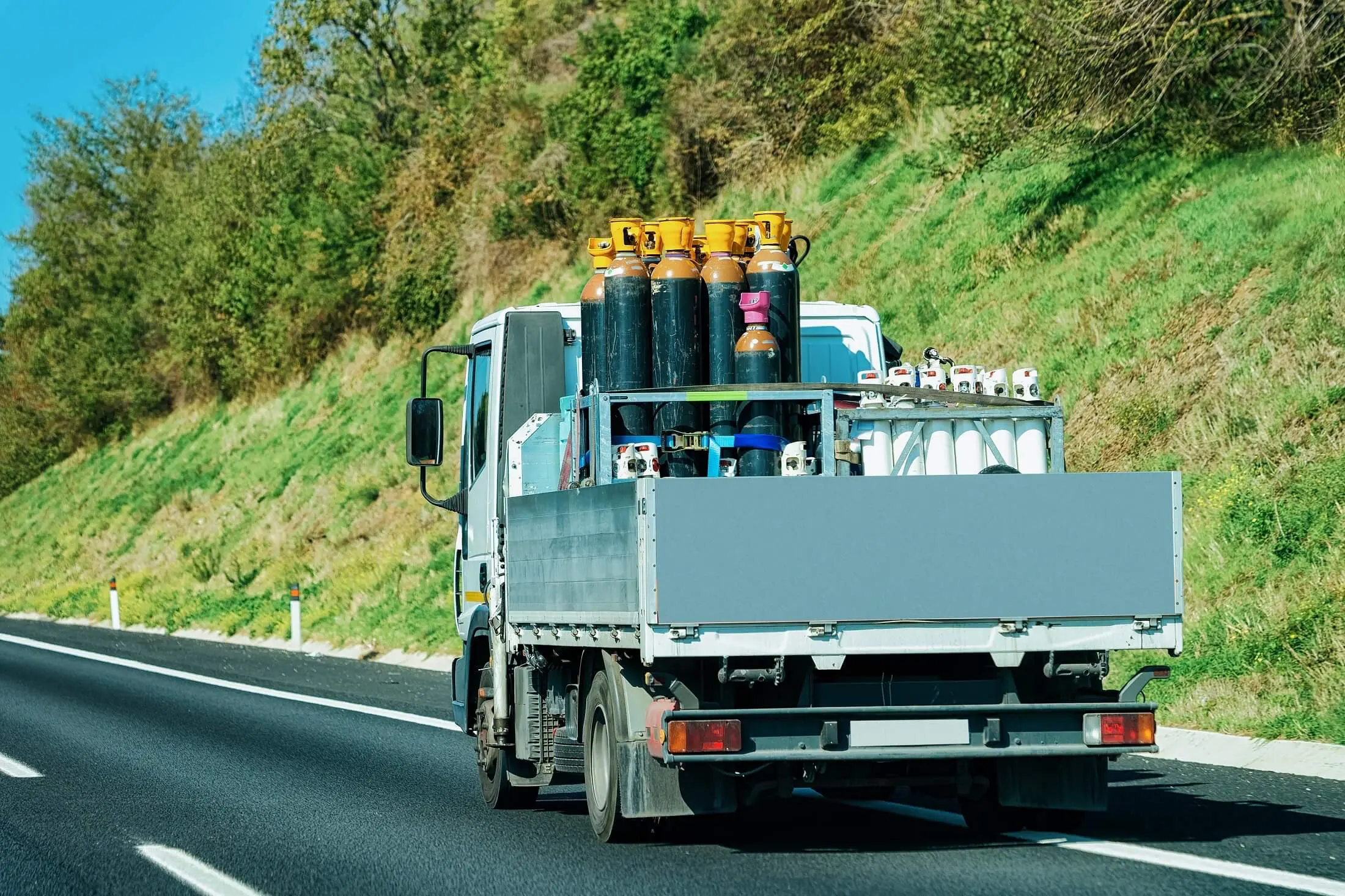
- Always transport gas cylinders in an upright position and secure them with straps or chains to prevent tipping.
- Use cylinder racks or brackets designed specifically for transportation.
- Never transport loose cylinders in the back of a truck or van, as they can roll around and become hazardous.
- Store cylinders in designated compartments that prevent movement during transportation.
2. Use Proper Storage Compartments
- Cylinders should be stored in well-ventilated compartments to prevent gas buildup.
- Keep flammable and oxidizing gases separated to avoid dangerous reactions.
- Use fire-resistant materials for storage areas to minimize fire risks.
- Ensure cylinders are stored away from direct sunlight and extreme heat sources to prevent pressure buildup.
3. Check for Leaks before Transport
- Inspect each cylinder for leaks, dents, rust, or damage before loading them onto a vehicle.
- Use soapy water to check for leaks around valves and fittings.
- Ensure that all cylinder valves are tightly closed and caps are in place.
- Periodically test and inspect older cylinders to ensure they remain structurally sound and safe for transport.
4. Follow Proper Loading and Unloading Procedures
- Avoid dragging or rolling cylinders to move them—always use a hand truck with a securing strap.
- When unloading, carefully place cylinders on the ground to prevent sudden impacts.
- Never lift cylinders by their valve or cap—always use proper lifting techniques.
- Train workers to handle cylinders carefully and follow standard operating procedures to minimize risks.
5. Maintain Proper Ventilation
- Never transport cylinders in closed or poorly ventilated vehicles, as leaked gas can accumulate and cause health risks.
- Ensure air circulation to prevent the buildup of toxic or flammable gases.
- Avoid transporting gases in the passenger area of a vehicle.
- If using enclosed transport compartments, ensure they have proper ventilation systems and exhaust outlets to expel any leaked gases.
Legal and Regulatory Compliance
Government agencies such as OSHA (Occupational Safety and Health Administration) and DOT (Department of Transportation) set strict regulations for carrying compressed gases. Businesses must comply with these guidelines to avoid fines and ensure worker safety.
- Labeling Requirements – Every cylinder must have clear labels indicating the type of gas, hazards, and handling instructions.
- Proper Documentation – Some gases require special permits and transport documentation.
- Emergency Procedures – Workers must be trained in what to do in case of a leak, fire, or explosion.
- Cylinder Testing and Certification – Gas cylinders must be periodically inspected, tested, and certified for continued use.
- Personal Protective Equipment (PPE) – Workers should always wear appropriate PPE, including gloves, goggles, and protective clothing when handling gas cylinders.
Emergency Response and Incident Management
Despite all precautions, accidents can still happen. It is essential to have a well-defined emergency response plan to handle potential incidents involving compressed gases.
- Fire and Explosion Response – Establish clear protocols for responding to fires, including proper evacuation procedures and fire extinguisher locations.
- Leak Management – Train workers to recognize the smell of gas leaks and immediately report any suspected issues.
- Spill Containment – Have absorbent materials and containment barriers on hand to manage chemical spills and gas leaks.
- Emergency Shut-Off Procedures – Ensure workers know how to quickly shut off gas valves in case of a leak or emergency.
Storage and Transportation Solutions from Wilcox Bodies
At Wilcox Bodies, we understand the importance of safe and secure storage for compressed gases. Our custom-built utility bodies are designed to keep gas cylinders secure, organized, and easily accessible, ensuring a safe work environment.
Key Features of Wilcox Bodies’ Storage Solutions:
Heavy-Duty Construction – Built with reinforced materials to withstand high-pressure cylinders.
Ventilated Compartments – Designed to prevent gas buildup and ensure proper airflow.
Secure Cylinder Holders – Prevents movement and tipping during transport.
Weatherproof and Fire-Resistant Materials – Protects against external elements and fire hazards.
Customizable Storage Options – Designed to fit your specific industry needs.
Advanced Security Features – Equipped with lockable compartments to prevent unauthorized access to gas cylinders.
Enhanced Durability – Designed to withstand harsh weather conditions and industrial environments.
Corrosion-Resistant Coatings – Ensures long-lasting protection against rust and environmental damage.
Protect Your Crew and Equipment with Wilcox Bodies
Transporting compressed gases requires care, expertise, and the right equipment. At Wilcox Bodies, we provide top-of-the-line utility bodies, service bodies, and mechanics bodies designed to enhance safety and efficiency for businesses handling compressed gases.
Contact Wilcox Bodies today to learn more about our secure gas storage solutions. Our team of experts is ready to help you design a custom storage system that meets your specific needs. Invest in safety, reliability, and performance—choose Wilcox Bodies!